

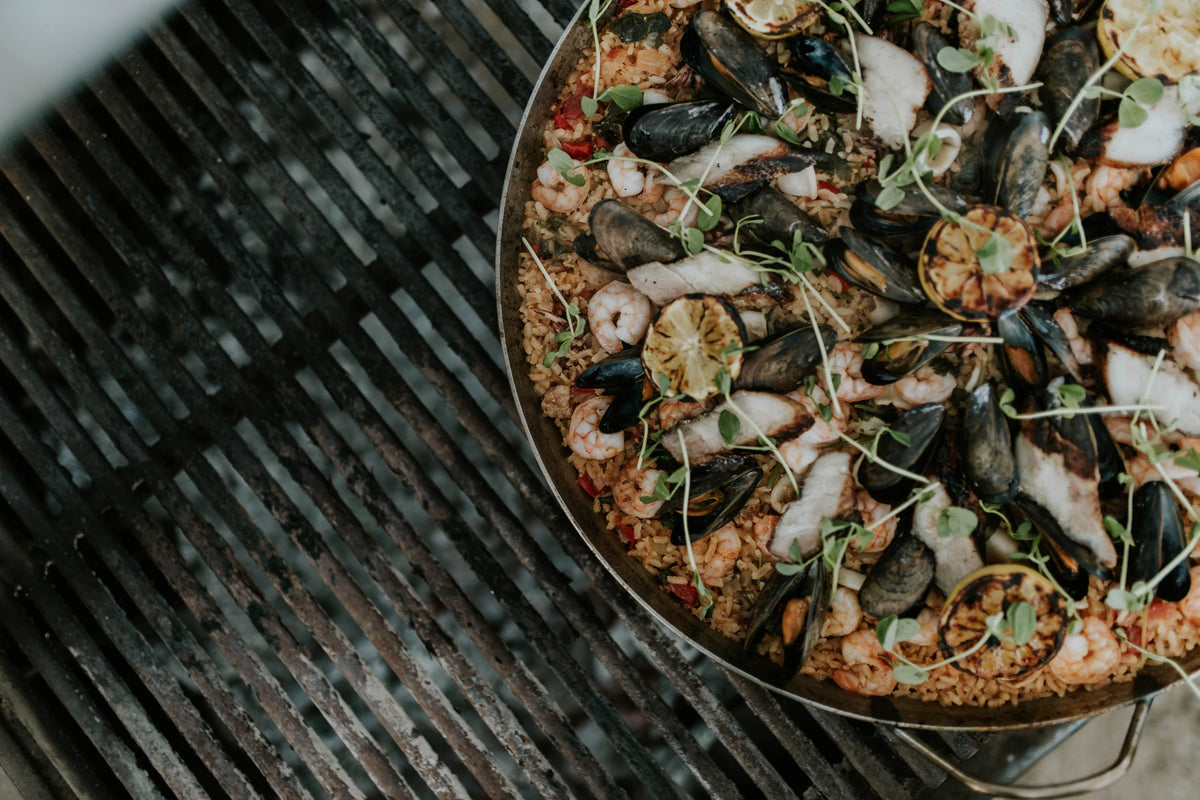
Season your Black Carbon Steel Pan with Chef David Kuo
At Little City Farm in Los Angeles, Chef David Kuo (of Little Fatty and Fatty Mart) takes us outside for a Black Carbon Steel seasoning session.
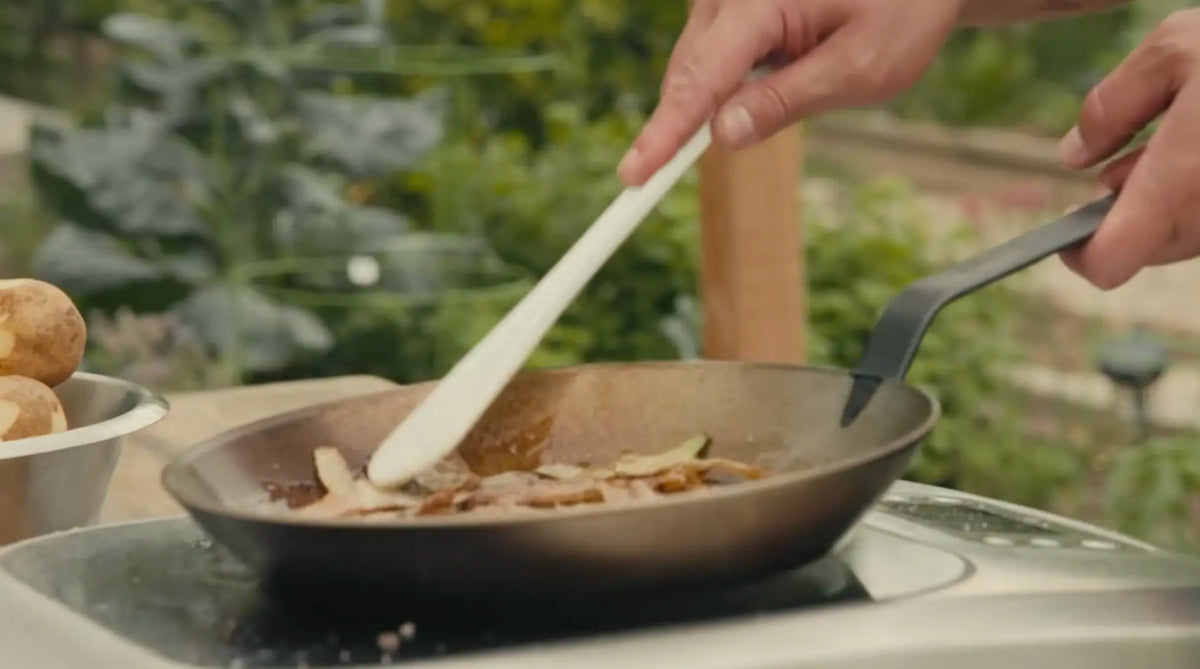
Initial Steps for Seasoning your Black Carbon Steel Pan:

Wash with Soap
Wash your pan thoroughly with soap and warm water. Use a sponge or bristle brush.

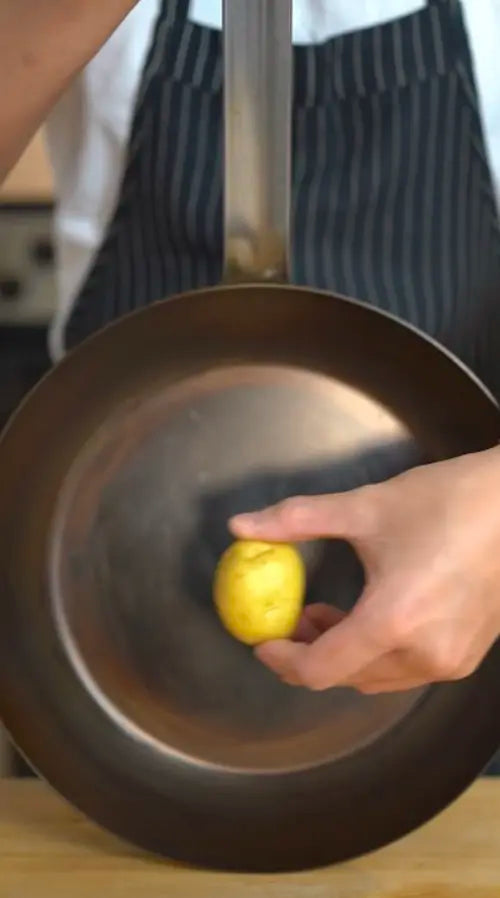
Skin Two Potatoes
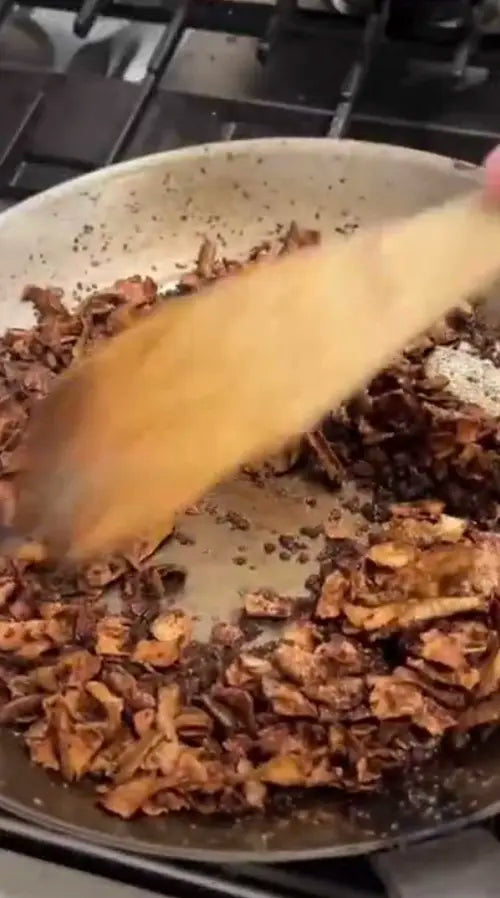
Combine the skins of two potatoes with 1/2 cup of high-heat, neutral oil and 1/4 cup of salt. Sautée on medium high heat for fifteen minutes.

Crisp, Discard, Wipe
Once potato skins are crisp, discard and wipe out your pan with a kitchen cloth or paper towel.

Repeat
Repeat the steps above to add another layer of seasoning to your pan, or go ahead and start cooking.
It Only Gets Better With Time

Your pan is composed of a single, pressed piece of fine high-carbon steel. It leaves the factory in an corrosion resistant bag to protect it during transit.

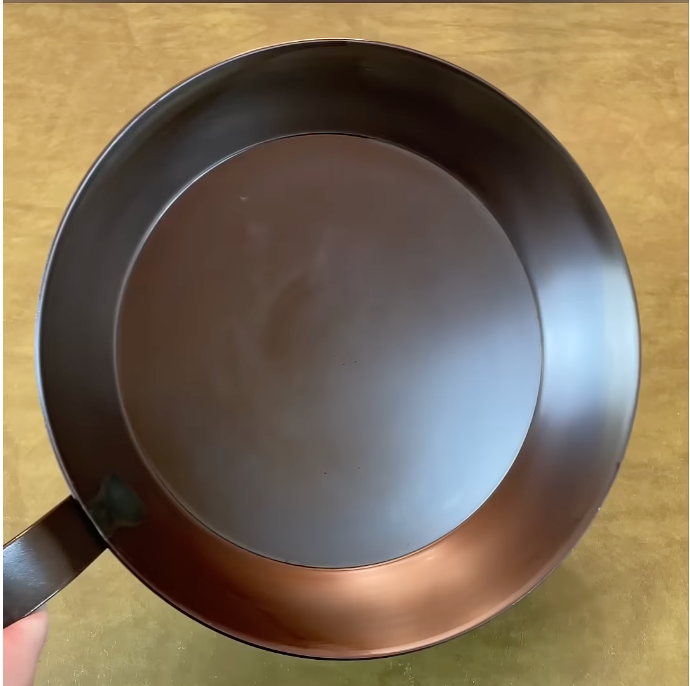
Seasoning is the process of bonding oil to the surface of your pan to create a protective and non-stick surface. After your first seasoning, your pan will take on a light brown hue.

The more you cook with your pan, the more your seasoning will develop. If your seasoning looks spotty, streaky, or darker in certain places, that’s okay. The best thing to do is keep cooking. Trust the process!

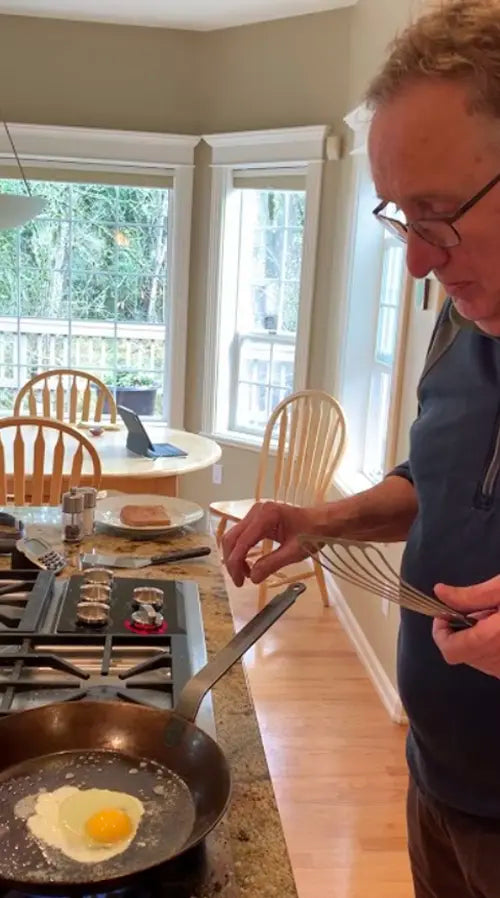
Eventually, your well-seasoned pan will have a slick, consistent black “patina” over the entire surface. With the proper maintenance and care, your pan will offer you natural, non-toxic, nonstick properties for years to come.
SEE IT IN ACTION
Seasoning advice from across the community

KEEP IT SLICK
What sort of oil should I use to season my pan?
What sort of oil should I use to season my pan?
There are lots of different opinions about what the best oil to season black carbon steel pans. We recommend choosing a neutral-flavored oil with a high smoke point for the initial seasoning process. Avoid fragrant oils like extra virgin olive oil or sesame oil for seasoning. Canola oil, peanut oil, grapeseed oil, avocado oil, and refined coconut oil are all good options. Animal fat, like beef tallow, duck fat, or bacon fat, can be used as well.
What’s the difference between Black Carbon Steel and Carbon Steel Pans?
What’s the difference between Black Carbon Steel and Carbon Steel Pans?
There is no difference in materials between cookware sold as “black carbon steel” and cookware sold as “carbon steel.” Both are constructed of high-carbon steel. We call our pans “Black Carbon Steel," as a direct translation of acier noir, the name used in France.
What’s the difference between Black Carbon Steel and Blue Steel?
What’s the difference between Black Carbon Steel and Blue Steel?
“Bluing” is a process of applying a blast of heat to the surface of a carbon steel product, creating a corrosion-resistant outer layer. “Bluing” is a thermal, not chemical, treatment. Some companies use this process on fry pans, but Matfer Bourgeat does not. However, we do use the Bluing process on our Blue Steel Baking Sheet.
Can I use my pan on induction or glass top burners?
Can I use my pan on induction or glass top burners?
Yes. You will have best results if your pan comes in complete contact with the surface of your cooktop. If your pan is tipping or warped, contact Matfer Customer Service.
I heard pans can warp on induction burners. Can I season my black carbon steel pan on an induction burner?
I heard pans can warp on induction burners. Can I season my black carbon steel pan on an induction burner?
An induction burner can apply heat very rapidly to your pan, causing some parts to warm up faster than others. In rare cases, this can cause high carbon steel pans, like ours, to warp. If you intend to season and use your black carbon steel pan on an induction or glass cook top, we suggest bringing your pan up to medium-high heat slowly, spending 15-20 seconds on low, medium low, and medium heat first.
Can I season my pan with the "oven method?"
Can I season my pan with the "oven method?"
This is another great way to season your black carbon steel pan. If you are cooking on a glass or induction stovetop, we recommend giving your pan an initial seasoning using the oven method:
- Bring your pan to medium-low heat on the stove top.
- Using a paper towel, apply a thin coating of high-heat oil, such as canola, to the entire inside surface of your pan.
- Put your pan upside down in a cold oven. Place a baking sheet on a rack underneath to prevent any oil drips.
- Bring the oven to 400 degrees and bake for 45 minutes.
- Let oven cool completely before taking out your pan. This method will help temper your pan to heat while providing you a great initial base coat for your seasoning.
Does seasoning make my kitchen smokey?
Does seasoning make my kitchen smokey?
Choose a high-heat neutral cooking oil for seasoning your pan. Vegetable, canola, peanut, and avocado oil are all good options. Use your hood fan while seasoning. You can also season your skillet on the propane burner of an outdoor grill.
Now that my pan is seasoned, how do I clean and maintain it between uses?
Now that my pan is seasoned, how do I clean and maintain it between uses?
We recommend wiping your pan out thoroughly with a dedicated cloth or paper towel after each use. Do not use any soap or detergent to scrub your pan. For a more thorough cleaning, use a bristle brush and warm water, then thoroughly dry your pan. After cleaning and drying, you can wipe a thin layer of neutral oil onto the surface of your pan to protect your seasoning until the next use.
Why does my pan look brown and spotty?
Why does my pan look brown and spotty?
The seasoning process will take multiple uses for your pan to develop a dark, consistent patina. After a few uses, your pan may have a streaky or brown appearance and be darker in some spots than others. This is perfectly okay- your seasoning will continue to darken over time.
My pan developed some rust. What can I do?
My pan developed some rust. What can I do?
If you have some surface rust on your pan, use warm water, a few tablespoons of salt, and a sponge to gently scrub the rust off the affected area. Wipe dry and then re-season your pan according to factory instructions. If your pan has rusted to the point where the steel is pitted along the surface, your pan’s nonstick properties will be compromised and you should consider replacing it.
Are any animal products used in the manufacture of Black Carbon Steel Pans?
Are any animal products used in the manufacture of Black Carbon Steel Pans?
No animal products are used in the manufacture of Black Carbon Steel Pans.
I thought my pan was well-seasoned, but food still got stuck. What do I do now?
I thought my pan was well-seasoned, but food still got stuck. What do I do now?
A combination of heat and friction will help. Bring a small amount of oil and a half a cup of salt to medium high heat. Scrape the sticking or burned bits with a wooden spoon or spatula to dislodge them. Rinse and wipe your pan clean. Next time you use your pan, cook with enough oil to reseason the area that was sticking. Seasoning is an ongoing process, and will occasionally require maintenance like this over the life of your pan.
My pan appears scratched or was damaged in shipment.
My pan appears scratched or was damaged in shipment.
Our pans and kitchen tools are manufactured for use in commercial kitchen environments. Slight cosmetic imperfections, weld marks, or discolorations may occur and will not affect the use of your pan in any way, more will they be visible once your pan is seasoned. If the surface of your pan has scratches that affect its performance, please let us know and we can issue you a replacement.
What do the words "Retention" and "Conductivity" mean?
What do the words "Retention" and "Conductivity" mean?
If a piece of cookware has good "heat retention," that means it gets hot and stays hot. Think: heavy-bottomed dutch ovens, cast iron pans, enameled steel. Heat retention is important for getting excellently seared meat and beautifully caramelized onions. But sometimes heavy, retentive cookware can take a while to heat up evenly.
If a piece of cookware has great "Conductivity," that means it heats up fast and with even distribution across the cooking surface. Copper cookware is the best of the best when it comes to this. Aluminum and stainless steel cookware is good, too. Matfer's Black Carbon Steel Cookware falls right in the middle. It retains heat better than traditional nonstick or stainless cookware, and conducts heat better than a cast iron pan. This versatility is what has made this material a professional kitchen workhorse for decades.


